Robin Pendergrast & The Kindness We Carry
Someone you love can become a stranger to everyone else. Robin Pendergrast asks us to look again—and consider what a moment of kindness might mean to the person still hoping they make it home.
He carries a camera to make people visible. He carries water because being seen is only a beginning.
Read his storyA camera. Cases of water. A reason to stop.
Of everything Robin Pendergrast told me, it was the water I kept thinking about.
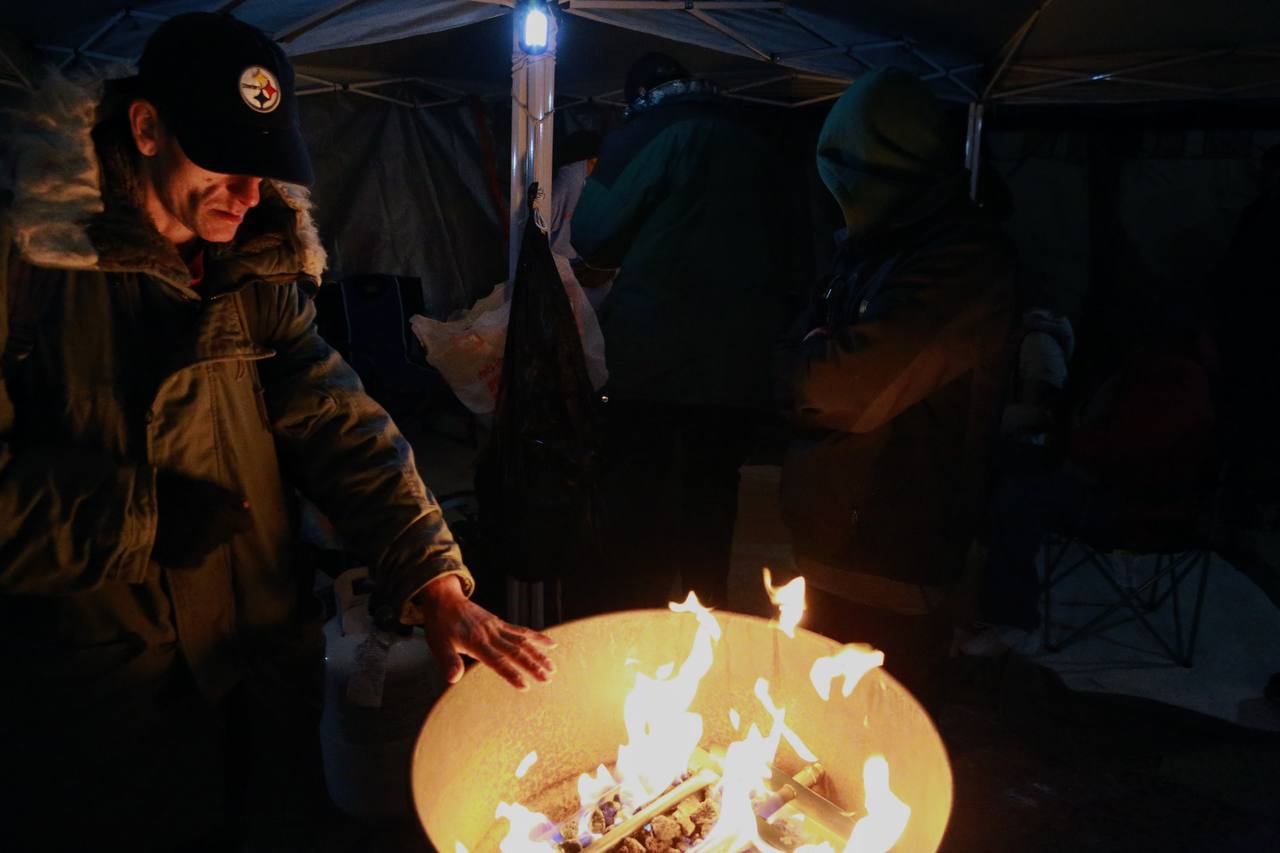
He says he keeps a camera in his car all the time. He also carries cases of bottled water, stopping to give it to people who need it. In the interview, he explained that the water was not always cold. He offered it anyway.
I understood why that mattered. When you have spent enough time worrying about someone you love, a stranger’s small act of care can mean more than that stranger will ever know. You find yourself hoping someone will notice. Someone will stop. Someone will be gentle.
Robin described being that someone with so little ceremony that I almost let the conversation move past it.
Asked what drives him, he returned to one word: “kindness.” His photographs give that word a face. The water gives it weight.
The power of a single photograph
Robin talks about his camera in terms of what it can do for somebody else. He described reaching out to dozens of organizations over the years, offering images that could help them explain their work and bring attention to people who need help.
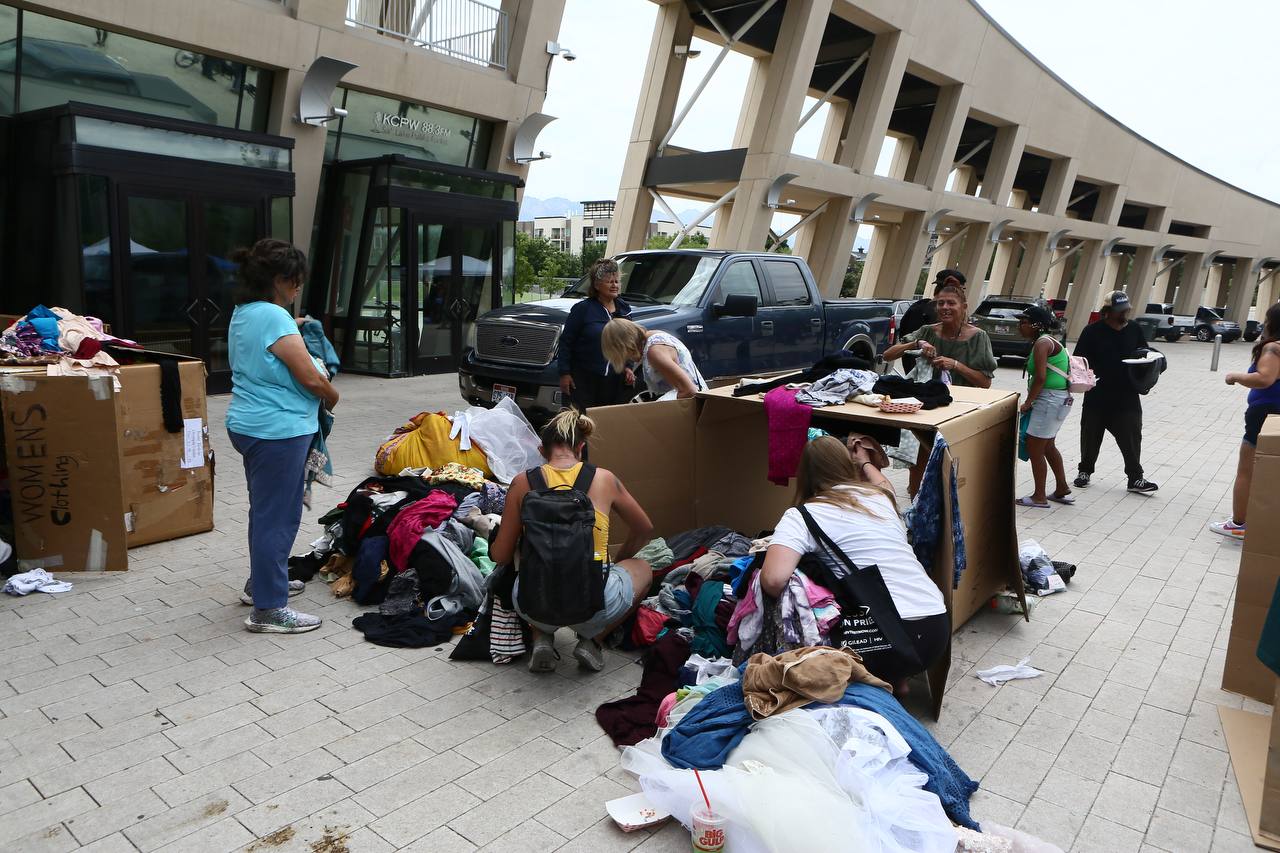
In one of the photographs he shared, clothing is piled beside large cardboard boxes on a city plaza. People bend to sort through it. Others stand nearby. The work is ordinary and physical: gathering, carrying, finding something useful, making it available.
I keep looking at those small exchanges. Care often reaches a person through something another person might consider unremarkable. A clean shirt. Something warm. A conversation in which nobody makes you feel ashamed for needing it.
An organization can do this work every week and still struggle to make people see it. Robin offers the skill he has. He wants the images to help.
During our conversation, he extended the same offer to me: “Anything you might need, let me know.”
The people we care about
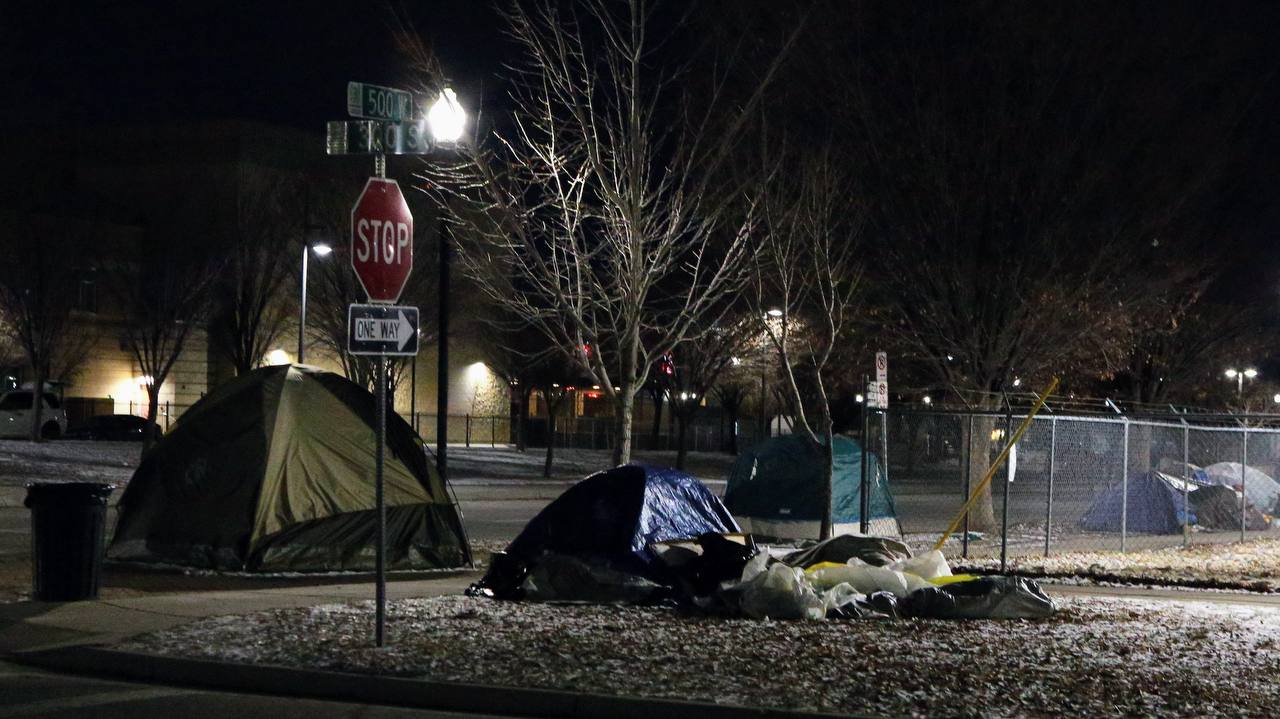
Then there are the nighttime photographs.
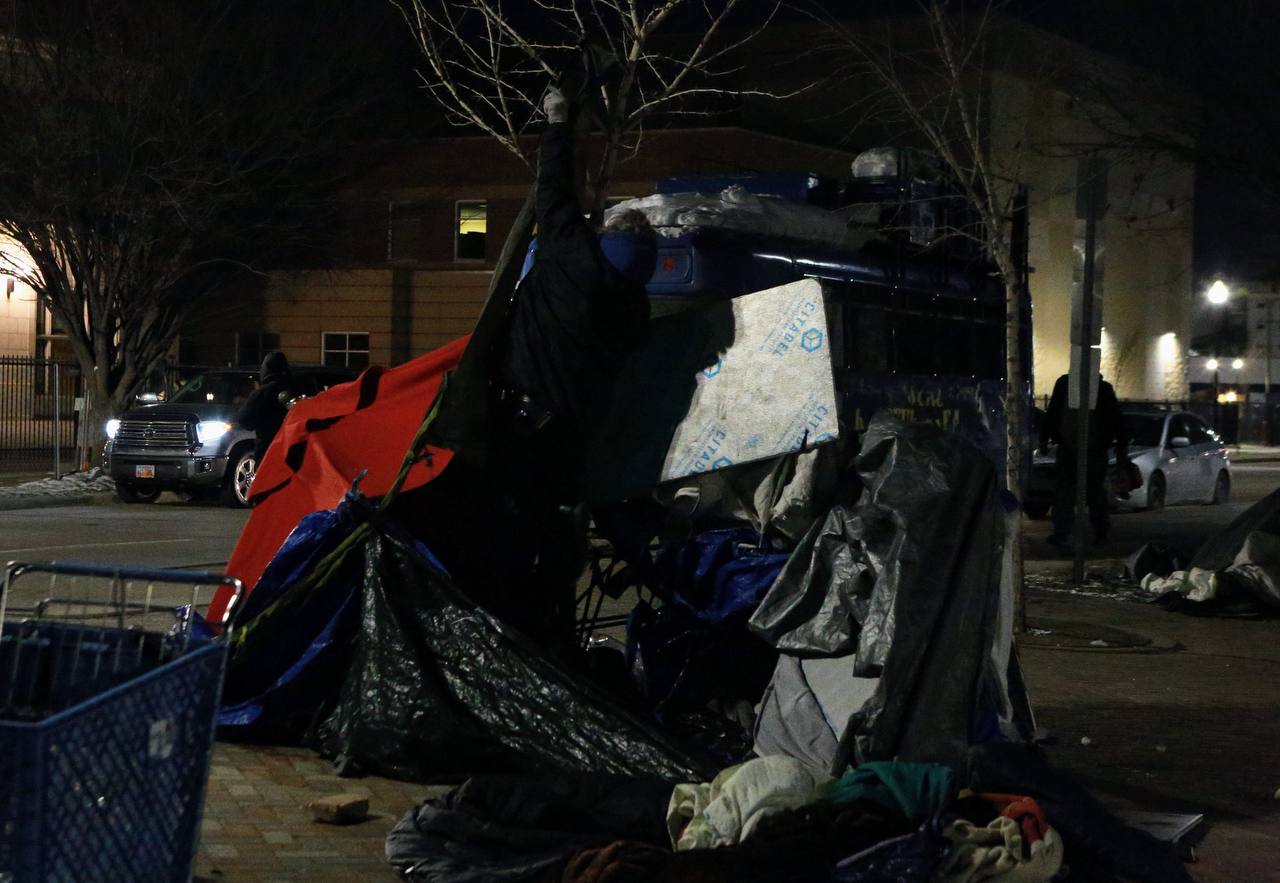
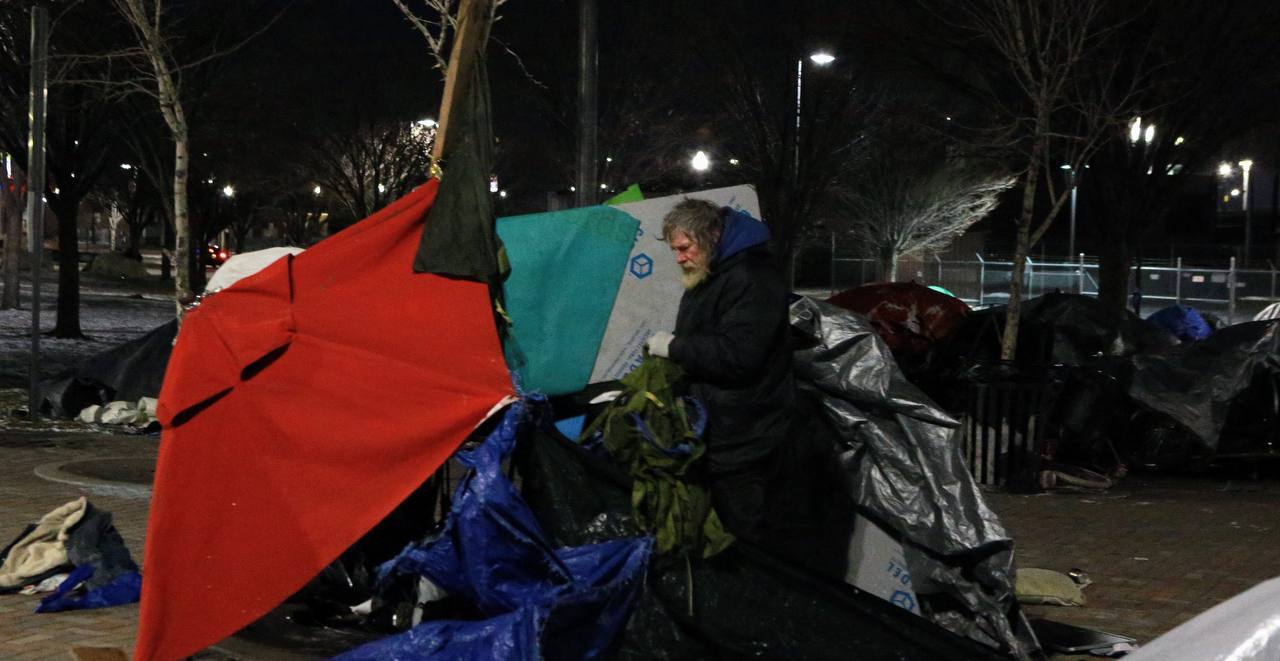
Tents beneath streetlights. Patches of snow. A shopping cart beside tarps and belongings. In one frame, a person stands next to a shelter pieced together from the materials at hand.
Robin spoke about how much it troubles him to see someone moving through the city with their possessions in a cart or wagon. Looking at these photographs, I find it difficult to keep the distance that the word “homelessness” can create.
I think about what it means to love someone whose life you cannot make safe. To keep caring when you are tired. To feel hope and anger and worry about the same person, sometimes all at once.
From the street, a passerby sees a stranger. Somewhere else, that person may be the one somebody cannot stop worrying about.
Robin kept bringing our conversation back to their humanity. I heard him. I also heard how much it costs when people forget.
“These are human beings.”Robin Pendergrast · from our conversation
What a smile can’t tell you
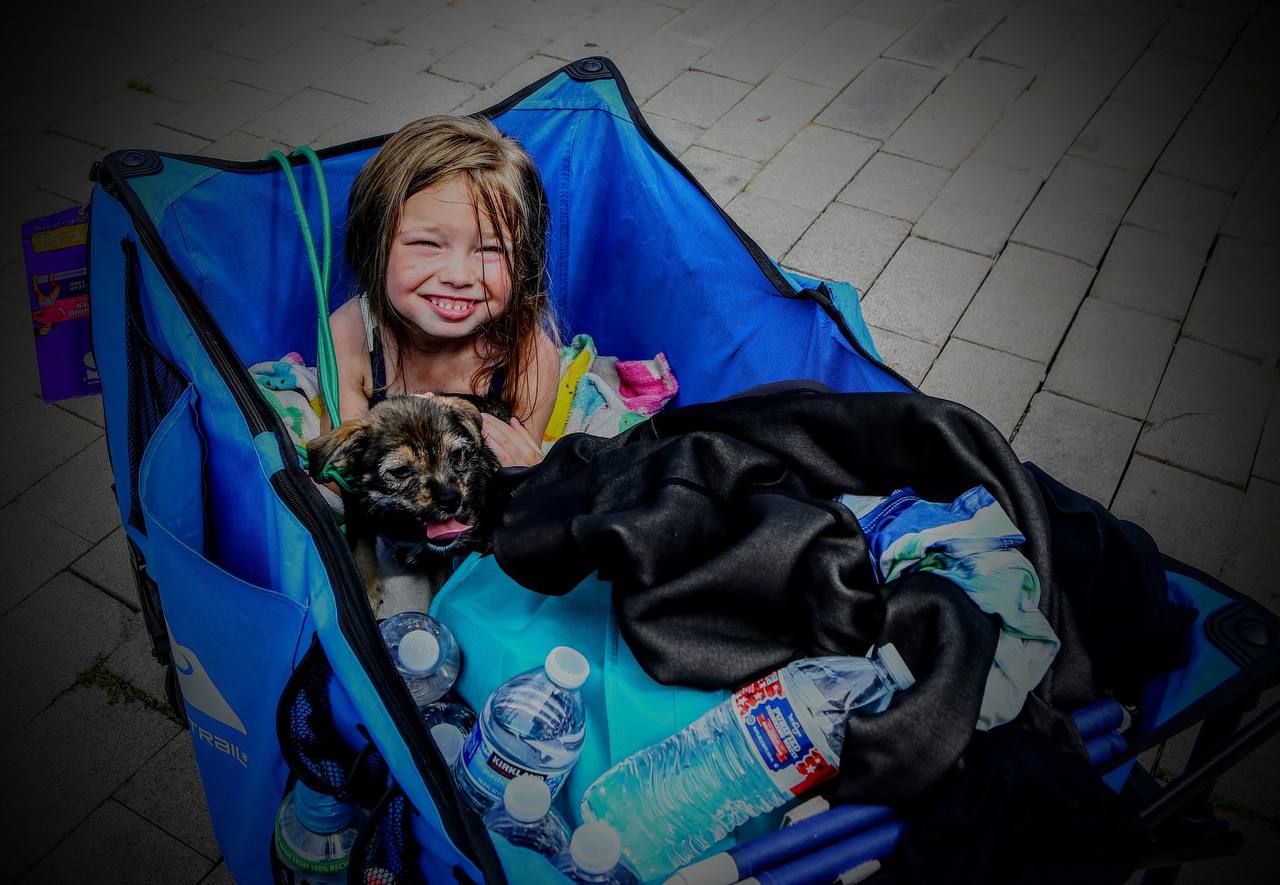
A child smiles beside a small dog in a blue wagon. Blankets and water bottles surround them. The child looks toward the camera.
I do not know this child’s circumstances. I know what the photograph brings up in me.
How early you can learn to be watchful. How much uncertainty a child can carry without having the words for it. How a good moment can be completely real, even when it does not explain everything around it.
A smile is a smile. It is not a full account of a life.
I want to leave this child the fullness of that moment—the dog, the smile, the connection with the camera—without asking the picture to prove a story we have not been told.
But I cannot look at it casually. Some images reach the part of you that learned to worry before it learned what to call the feeling.
Make a difference.
Join the cause.
Let that feeling become a first step. Add your name to connect with the cause.
Kindness has to reach someone
Robin also talked about the organizations trying to help. He described groups working in “silos” and said he wanted more collaboration so their efforts would connect rather than duplicate one another.
What I heard beneath that frustration was concern about whether help actually reaches the person waiting for it.
If you have ever wanted desperately for someone to accept help, you know how much hope can gather around a single next step. A place to go. A person who will answer. An offer that turns out to be real.
Robin brings his photographs to that effort. An organization doing useful work may need images that make its purpose clear. A business that wants to contribute can begin by asking what is needed. A volunteer can find out where an existing effort needs another pair of hands.
The question becomes specific enough to answer: what can I do that will be useful to somebody?
Robin carries one answer in his car.
He keeps asking how he can help
Near the end of the interview, I asked Robin for photographs. He offered to send a collection so we could choose. These are eight of the images supplied for this feature.
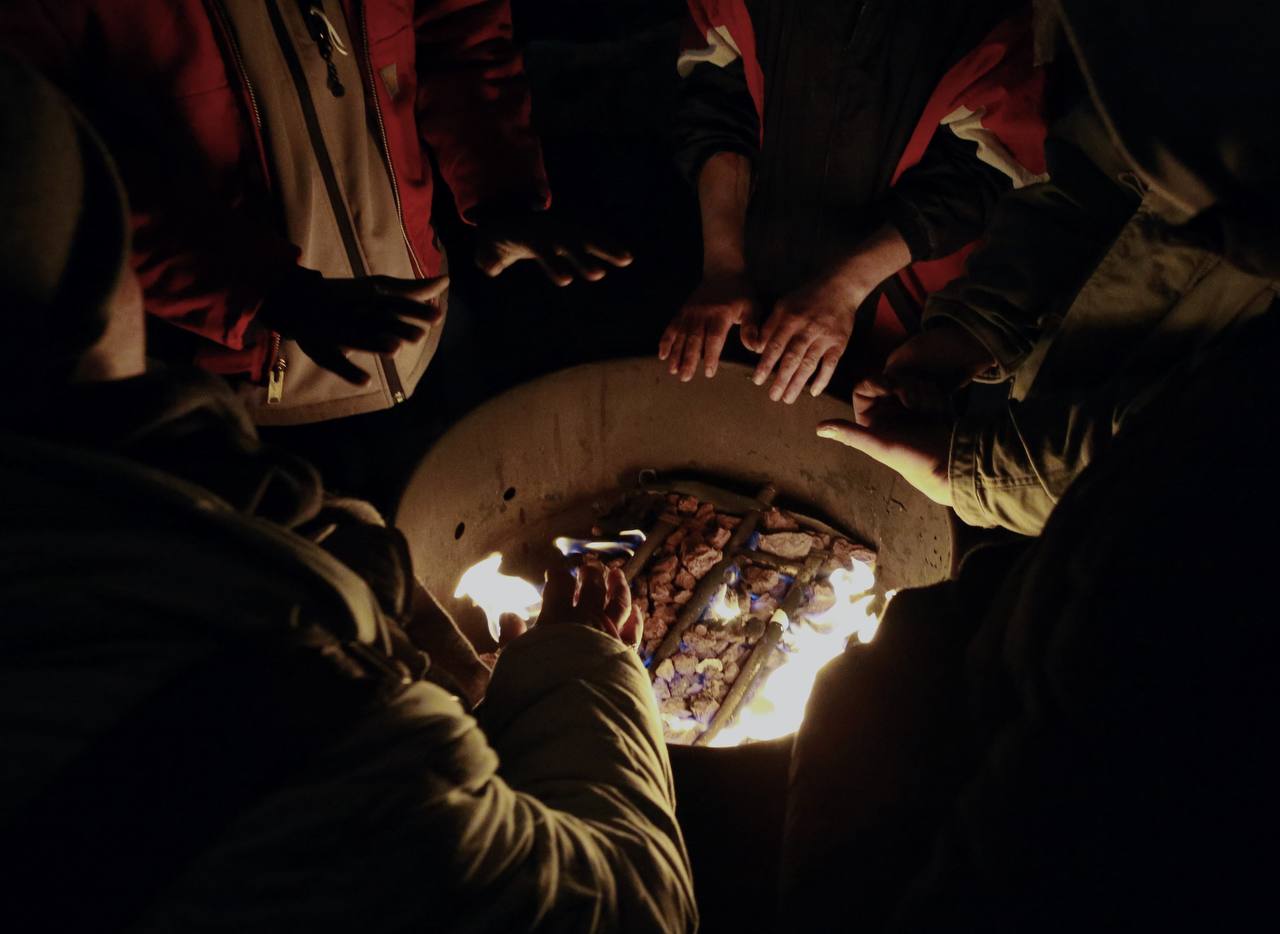
Several pairs of hands reach toward a fire in the opening photograph. I return to that image often. For a moment, all you see is the same need reaching toward the same warmth.
There is no way to know a whole person from these frames. There is enough to remember that a whole person is there.
Robin’s public portfolio includes human-interest and photojournalism work alongside his other photography. For an organization with a story that needs to be seen, it offers a place to begin a conversation.
What stayed with me from ours was his readiness. He wanted to know what he could send, what he could photograph, where he could be useful. By the time we finished talking, I believed that offer was the most important part of his story.
Be someone who stops
I cannot look at these photographs and promise myself that caring will fix everything. I know too much about loving someone to make that promise.
But I know what it means to hope they will encounter kindness while they are beyond your reach.
That is why Robin’s work matters to me. He gives people his attention, then asks what else he can offer. He does not need to know every chapter of a person’s life before deciding they deserve care.
If you run an organization whose work needs to be seen, explore his photography and ask about a collaboration. If these images make you want to help closer to home, ask an established local organization for one current need you can meet. Choose something you can follow through on.
I keep coming back to the water. A bottle, offered by someone who stopped.
To the person receiving it, that moment belongs to the present. To someone who loves them, it could mean this: for a little while, someone was looking out for them.
Have a story that needs to be seen?
Explore Robin’s photographs and use his public website to ask about a project, an organization, or a collaboration.
Robin F. Pendergrast Photography · rfpphoto.com