The flashy number is eight acres. The important number is seven.
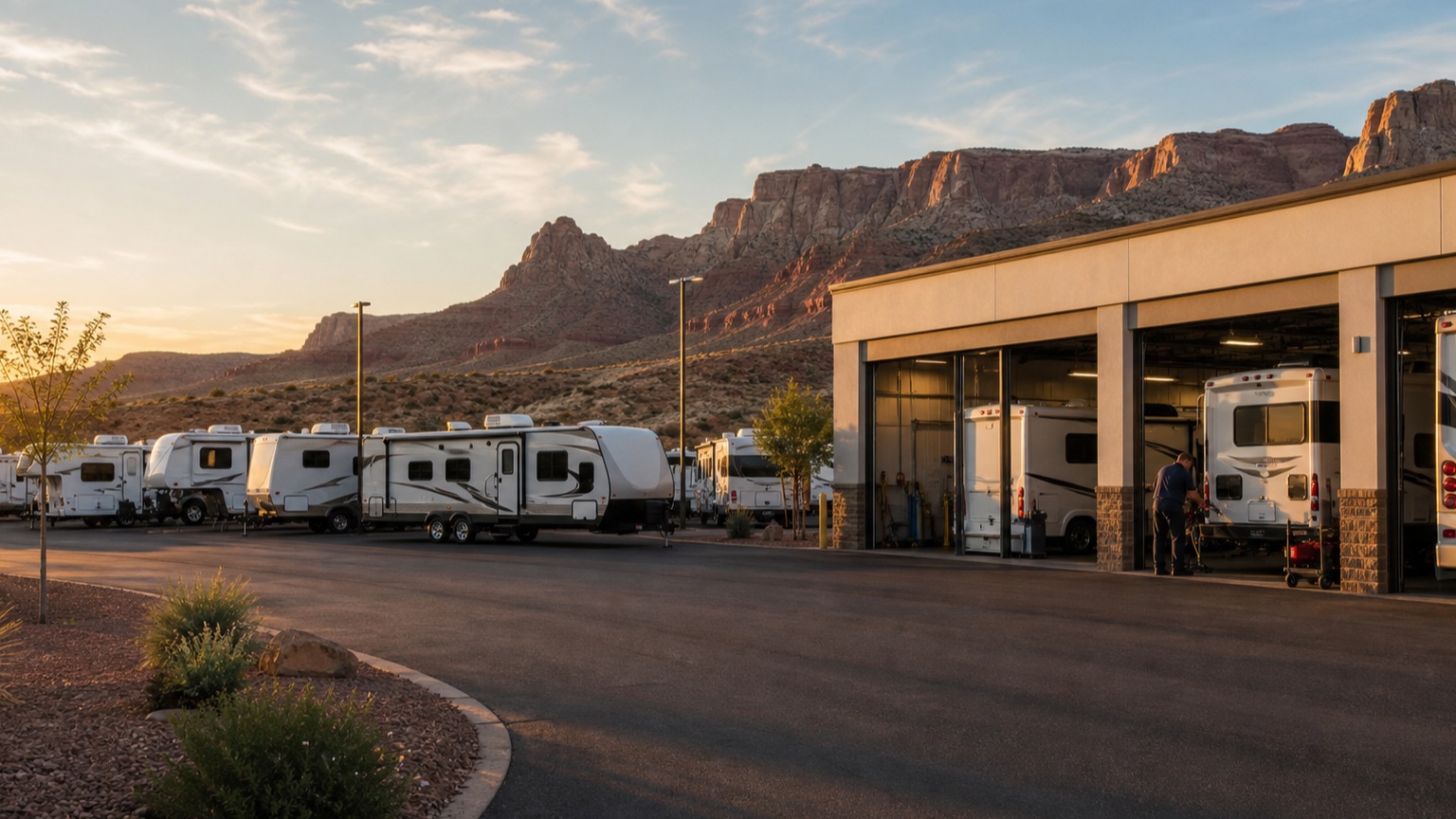
Blue Compass RV’s newly opened St. George-area dealership sits at 136 Old Highway 91 in Hurricane, close to the stream of trailers and motorhomes moving through Southern Utah’s red-rock country. RVBusiness and RV PRO reported the July 17 opening. Their figures describe a sizable operation: eight acres, 11,000 square feet indoors and seven enclosed service bays.
The acreage makes the announcement sound big. The bays make the business case interesting.
An RV dealership does not finish its job when a customer drives away. That vehicle comes back for winterization, warranty work, collision repairs, solar installation, replacement parts and the inevitable question that begins with, “Is this supposed to be doing that?” Blue Compass RV’s official location page lists those services for customers across St. George, Cedar City, Mesquite and the wider Southern Utah market.
That turns the Hurricane opening into more than a story about inventory. It is a bet on the long tail of ownership—and on being the place customers return to after the excitement of the purchase wears off.
The facility figures come from the company and trade publications. They do not prove customer satisfaction, fast turnaround times or financial success. What they do show is where Blue Compass RV chose to put physical capacity. President and CEO Jon Ferrando has described St. George as a growing RV market shaped by nearby parks, campgrounds and outdoor travel. If that demand keeps growing, the seven bays may matter more to the company’s reputation than the size of the sales lot.
Every Main Street operator has a version of those bays. For a cabinet shop, it is installation and punch-list capacity. For a roofer, it is scheduling, callbacks and warranty work. For a restaurant, it is the kitchen’s ability to survive the promotion that filled the dining room. For a software company, it is onboarding and support. The sale gets counted immediately. The obligation it creates arrives later.
That delay is where otherwise healthy growth can turn into service debt. Orders rise, but so do unanswered messages, missed handoffs and jobs waiting for one senior person to rescue them. Marketing still looks successful on the dashboard. Customers experience something else: uncertainty.
A useful test takes 30 minutes. Pull the last ten completed sales and trace what happened afterward. How many calls, repairs, updates, installations, billing questions and follow-ups did each sale create? Where did work wait? Where did a customer have to ask twice? Which step depended on one person remembering it instead of a visible system?
Then watch four numbers each week: new orders, open service items, the age of the oldest unresolved item and repeat contacts about the same problem. If sales climb while unresolved work gets older, the business is borrowing trust from future customers.
The lesson from Hurricane is not that every company needs a bigger building. It is that demand and support should expand together. The lot may win the first look. The seven enclosed bays are where Blue Compass RV will have to keep the promise.