The ring is not the whole product.
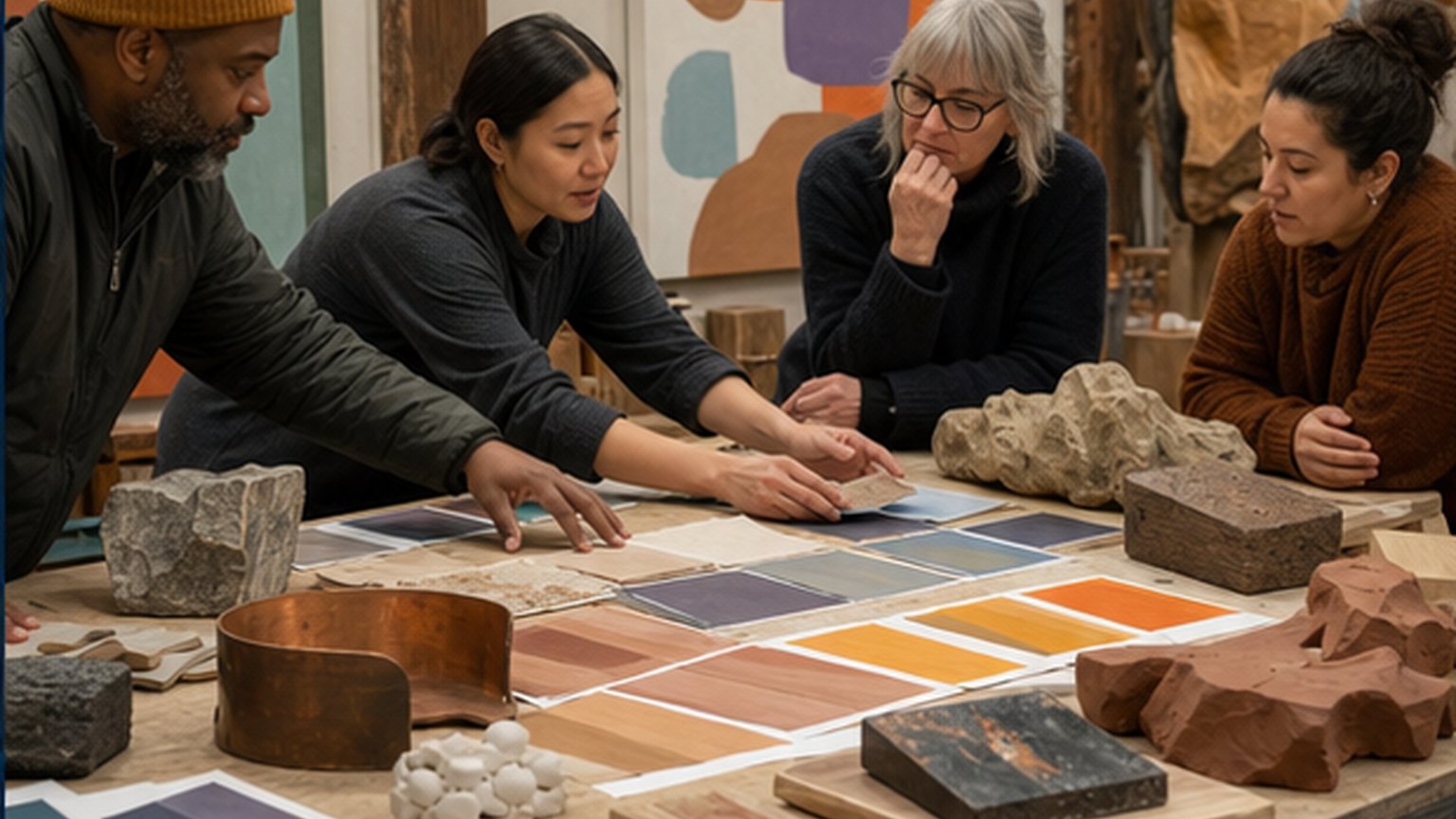
At Gem Studio, the customer sits at a workbench, picks up real tools and shapes a piece of silver under the guidance of a silversmith. The finished jewelry goes home in a pocket or on a finger. The harder-to-copy part is the hour spent making it beside another person.
That distinction is the center of Matt James’s current operating thesis.
In a July 21 report, Utah Business described the Gem Studio CEO as making an “anti-AI bet.” James told the publication that human connection and the experience come before the physical product. The company hires silversmiths not only for technical instruction but also for their ability to engage the people gathered around the bench.
Gem Studio’s public site confirms the practical shape of the offer: guided silversmithing workshops and permanent-jewelry appointments that customers can book directly.
This is not evidence that screens are disappearing or that every customer is rejecting artificial intelligence. James uses AI in his own work, according to Utah Business. His stated boundary is narrower: technology should not crowd out hands-on creativity or human connection.
That nuance matters. “Anti-AI” makes a sharp headline, but the underlying business strategy is not anti-technology. It is pro-contrast.
When more work, shopping and entertainment happen through the same glowing rectangle, an experience involving a hammer, a metal mandrel and a shared table becomes easier to distinguish. Gem Studio is not trying to beat digital products at convenience. It is offering something convenience cannot fully reproduce.
There is broader evidence for the concern behind that positioning. A 2025 Pew Research Center survey of 5,023 U.S. adults found that 53% expected AI to worsen people’s ability to think creatively, while 50% expected it to worsen their ability to form meaningful relationships. Among adults younger than 30, those shares rose to 61% and 58%, respectively.
Those are national attitudes, not a measurement of demand at Gem Studio. No public source reviewed for this issue disclosed the company’s current revenue, workshop attendance, repeat-visit rate or customer-acquisition cost. The Pew results also measure expectations about AI, not purchases of jewelry workshops.
What the sources do establish is a real operator, a current offer and a deliberate decision about where human attention belongs.
James’s February Utah Business profile adds another useful detail. Asked to describe his role, he pointed to vision and long-term strategy, then to the systems, team and culture needed to scale intentionally. That is important because an experience business cannot rely on atmosphere alone.
A workshop may feel spontaneous to the customer, but it is produced through repeatable choices: how guests are welcomed, how tools are staged, how instruction is paced, when a guide steps in and whether beginners leave feeling capable rather than embarrassed.
The operator lesson is larger than jewelry.
A restaurant can sell dinner or design a place where phones naturally stay in pockets. A garden center can sell plants or teach six neighbors to build container gardens together. A repair shop can complete a job or let a customer see and understand the craft. A bookstore can stock titles or host a table where readers leave knowing one another’s names.
The useful question is not, “How do we become anti-AI?” It is, “What part of our value becomes stronger when it is unmistakably human?”
There is a concrete way to answer that today.
Take one customer journey and mark every step as **automate**, **assist** or **protect**. Automate repetitive coordination. Use technology to assist research, scheduling and follow-up. Protect the moments where judgment, touch, trust or conversation are the product.
Then choose one protected moment and make it visible in the offer.
Do not merely advertise “personal service.” Name the action: a 20-minute design conversation, a guided tasting, a hands-on demonstration, a repair walkthrough or a shared worktable. Give the customer a reason to understand why showing up matters.
Gem Studio’s advantage is not that machines cannot make jewelry. They can.
Its advantage is that a machine cannot be the other person at the table.