The new burrito is loud. The returning sauces are the real story.
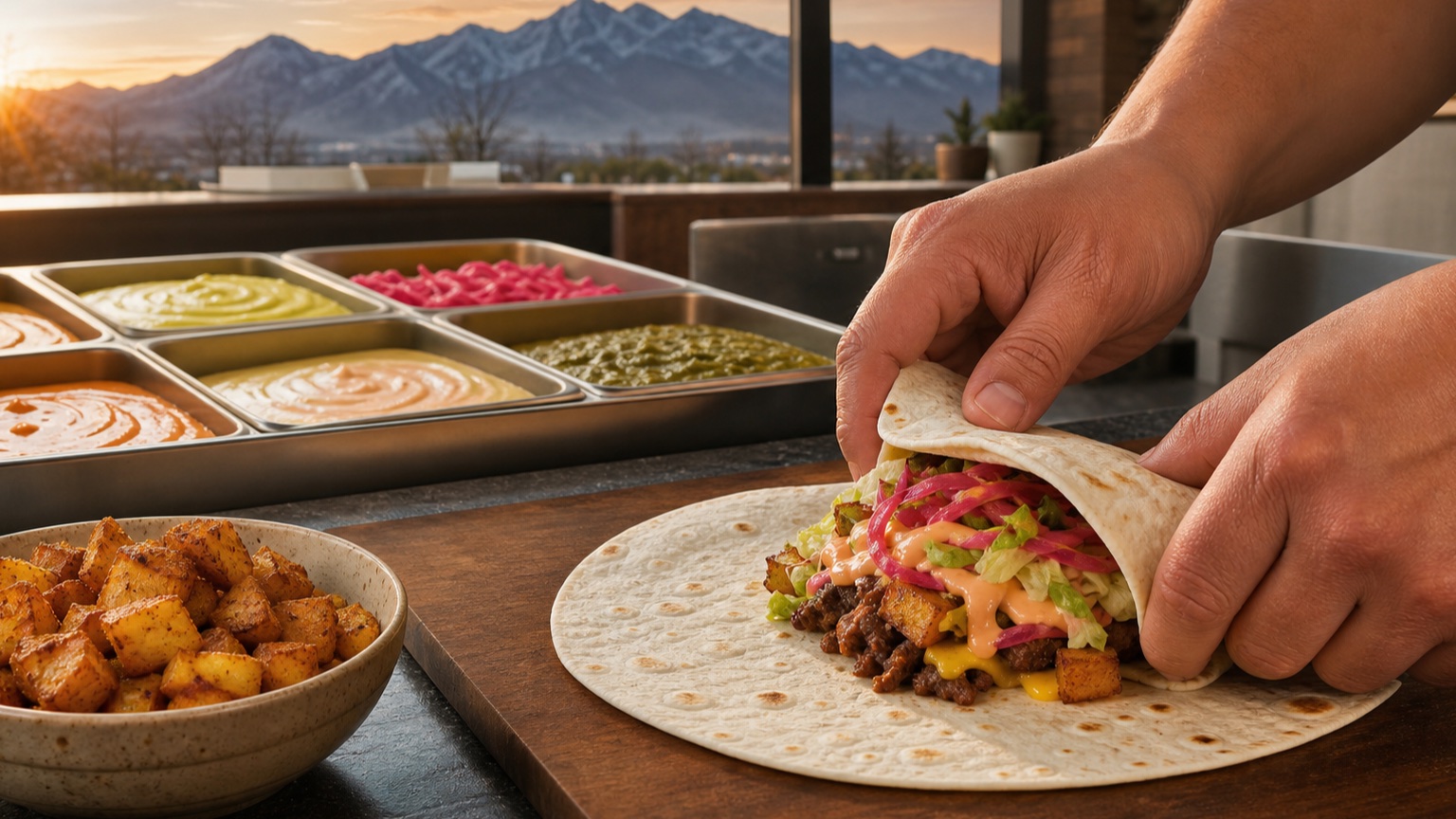
On July 24, Cafe Rio introduced a Utah-only handheld burrito built around a deliberately improbable combination: seasoned ground beef, chili-lime fries, pickled pico de gallo, cheese, burger sauce and a side of fry sauce, all wrapped in a fresh tortilla.
The Pioneer Day launch is meant to attract attention. According to Utah Business, the item is priced below $10 and is the first conspicuous menu move under Mike Burns, who was named Cafe Rio’s chief executive in June.
But Burns is doing something less theatrical at the same time. Cafe Rio is restoring Cilantro Lime Vinaigrette, Habanero sauce and Medium Hatch Green Chile.
Those items had been removed during an earlier attempt to simplify the menu. Utah Business, citing the company’s launch announcement, reported that the decision drew customer complaints and that Burns has acknowledged the simplification did not deliver what guests wanted.
That reversal deserves more attention than the stunt burrito.
Simplification is usually attractive from behind a spreadsheet. Fewer ingredients can mean fewer purchasing decisions, fewer preparation steps, shorter training documents and less inventory sitting in a walk-in cooler.
Customers do not experience a spreadsheet, however. They experience the missing sauce.
A menu item that appears minor in a cost model may carry a disproportionate amount of memory and preference. One guest uses it to recreate the same lunch every Friday. Another orders it because it is the only flavor the family agrees on. Remove enough of those small rituals and a business can become easier to operate while becoming less worth visiting.
Cafe Rio’s public ordering surface confirms that the chain still competes on ordinary restaurant fundamentals: nearby locations, pickup, delivery, catering and repeatable meals. The new burrito may give a customer a reason to visit once. Restoring a familiar sauce may give an existing customer a reason to return.
The distinction is acquisition versus retention.
A novelty launch creates a clean marketing event. It produces photographs, conversation and a deadline. A restoration is quieter because the audience already knows the product. Yet for an operator trying to repair trust, saying “we removed something you valued, and we are putting it back” can be more credible than promising a reinvention.
There are limits to what can be concluded today.
The main report reviewed for this issue was adapted from a company press release and edited by Utah Business. Cafe Rio’s own site independently confirms that customers can order from and locate restaurants, but the public surfaces inspected did not disclose launch sales, guest traffic, same-store performance, restaurant-level margins or the number of complaints about the removed sauces.
There is therefore no public evidence yet that the burger burrito will succeed, that the restored items will improve retention or that the broader turnaround is working. The signal is the operating decision, not a proven financial result.
That decision contains a practical lesson for smaller Utah businesses.
When performance softens, operators often add before they restore. They invent a new package, promotion, service line or seasonal product because novelty feels like motion. The better first question may be: **What did customers previously value that we made harder to buy?**
A barber may have removed walk-in hours that anchored neighborhood traffic. A repair shop may have stopped giving customers a plain-language walkthrough. A restaurant may have shortened its menu by cutting the side dish regulars paired with everything. A retailer may have replaced a knowledgeable phone call with a form.
None of those choices is automatically wrong. Complexity has a cost. The mistake is treating every removed step or item as equally expendable.
Operators can run a restoration audit today.
Write down the five most meaningful things the business has removed, reduced or automated during the past year. For each one, check three signals: direct complaints, repeat-customer behavior and the amount of operational burden it actually removed.
Then apply a simple decision rule: if customers mention the loss repeatedly, frequent buyers used it disproportionately and its return would not recreate a serious cost or safety problem, test the restoration before building something entirely new.
Give the test a defined window and one metric. A restaurant might track attachment rate. A service business might track repeat bookings. A shop might track whether returning customers ask for the restored option without prompting.
Cafe Rio is wrapping its turnaround in fries and fry sauce. That is the part people will photograph.
Putting the missing sauces back is the part other operators should study.