One year after releasing its flagship cider, a Kamas operator is making the bottle bigger—and the business around it more deliberate.
Dendric Estate announced Friday that Dry Cut is now available in a 1.5-liter bottle. On its own, that could be dismissed as packaging news. Set beside the cidery’s other moves, however, the larger format reveals a useful Main Street pattern: one core product is being asked to do several different jobs.
The new bottle is designed for a shared table. A smaller 375-milliliter version gives customers a lower-commitment entry point. The standard 750-milliliter bottle occupies the middle. The company says all three formats are available through its Kamas bottle shop, while the smaller bottle has also entered Utah state liquor stores.
That is product architecture, not merely variety.
A local operator does not always need more products. Often, the better question is whether the existing product can be repackaged for more occasions, customers and sales channels.
## The verified signal
Dendric Estate’s July 31 announcement identifies Brendan Coyle as the operator behind the cidery and marks one year since Dry Cut launched in July 2025. The company says its distribution now includes bars, restaurants, hotels and resorts in the Park City and Salt Lake City markets, along with locations in southern Utah.
Those distribution and visitor figures come from Dendric Estate’s own release and have not been independently audited by Utah Main Street. They should be read as company-reported results, not third-party measurements.
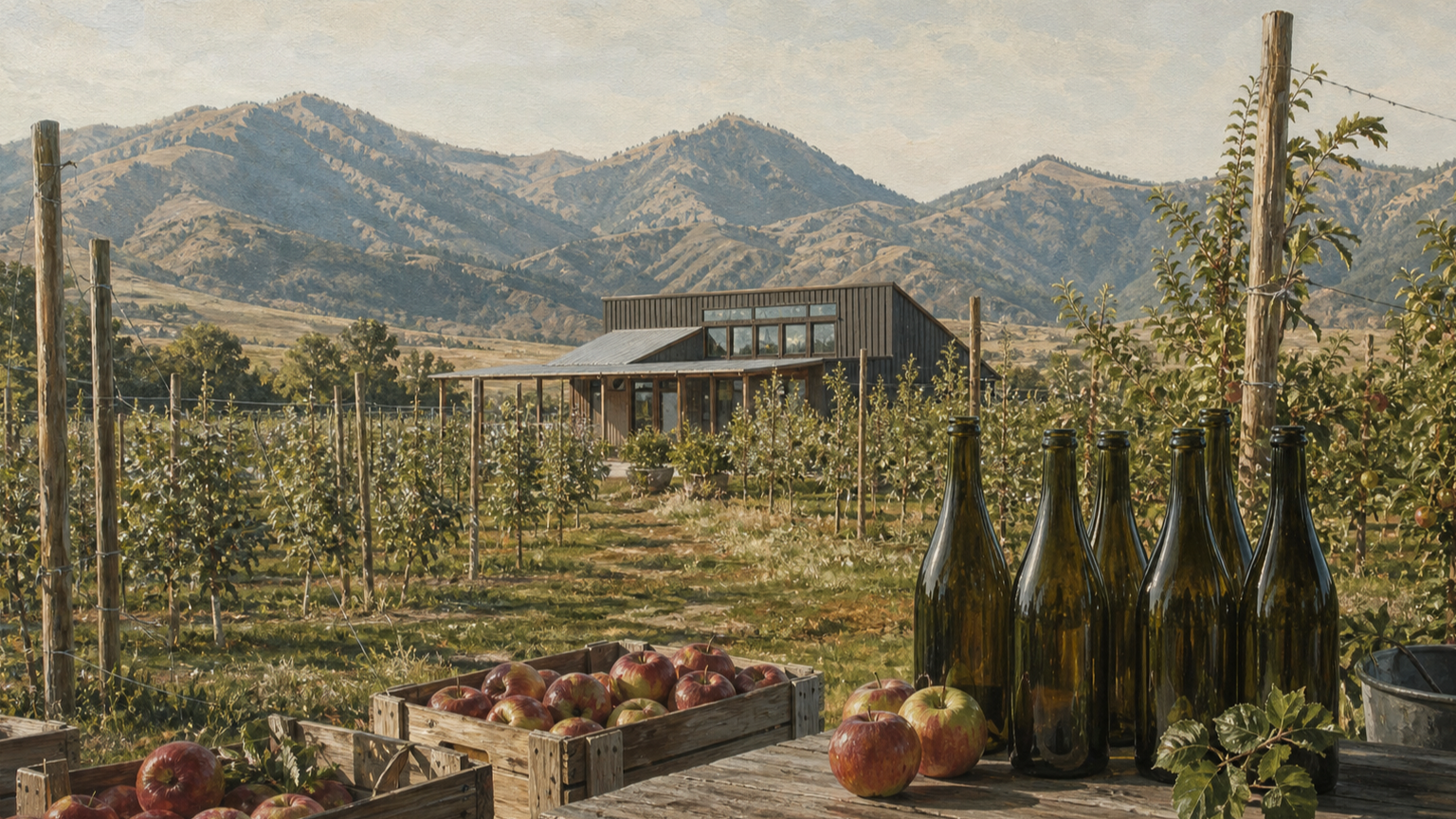
Other parts of the operation can be checked directly against the cidery’s public pages. Dendric Estate describes itself as a Kamas business working from a high mountain valley. Its site places the orchard at an elevation of 6,440 feet and says Dry Cut’s current batch combines 15 apple varietals from three partner orchards across the Mountain West.
The company also reports planting more than 3,300 additional cider-apple trees this year, expanding its trellised orchard to more than six acres. That is a long-horizon investment. Trees do not solve next week’s inventory problem. They strengthen the future relationship between the product and the place printed on its story.
Utah’s Department of Alcoholic Beverage Services provides broader context. Its Proudly Utah program expressly includes local cideries among the brewers, distillers and winemakers the department says contribute to the state’s culture and economy. Dendric Estate’s individual sales performance is not established by that directory, but the state’s recognition confirms that local cider is a defined part of Utah’s beverage market.
## One product, several doors
The important operating move is the sequence.
Dry Cut began as a limited release, according to the company. The business then added hospitality accounts, a smaller state-store format and now a large-format anniversary bottle. Meanwhile, the estate orchard is being expanded behind the product.
Each step opens a different door.
Restaurants can present the cider alongside a meal. State stores make it accessible away from Kamas. The half bottle lowers the size of the trial. The magnum turns the same cider into a centerpiece for a gathering. The orchard gives the brand a physical story that competitors cannot reproduce quickly.
None of this proves that every move will generate durable profit. The company has not publicly supplied margins, case volumes, repeat-purchase rates or the share of production supported by estate-grown fruit. Plans for a future tasting room and direct-to-consumer store also remain plans, not completed channels.
That uncertainty matters. Expansion can create complexity faster than it creates cash.
Still, the architecture is worth studying because the moves reinforce one another. The bottle shop introduces the place. Hospitality placements introduce the product. Package sizes accommodate different occasions. The orchard deepens the reason the brand belongs in Kamas.
## The operator move for today
Take your best-selling product or service and draw four boxes beneath it:
1. **Trial:** What is the smallest credible way a new customer can begin? 2. **Core:** What is the standard purchase you want customers to repeat? 3. **Occasion:** Can the offer be packaged for a gift, gathering, milestone or seasonal use? 4. **Place:** What local ingredient, process, relationship or experience makes it difficult to copy?
Do not add a new offering yet. First identify whether one proven offering can travel through those four boxes without losing quality or confusing the customer.
Then choose one measurement for each format: first-time buyers, repeat purchases, average order value or wholesale reorders. Review the numbers after 30 days.
Dendric Estate’s anniversary release is a reminder that growth does not always begin with a crowded catalog. Sometimes it begins by giving one good product more than one sensible way into a customer’s life.